Regulatory Whiplash as a Tradeable Event: A US Investor's Field Guide to the SEC Era
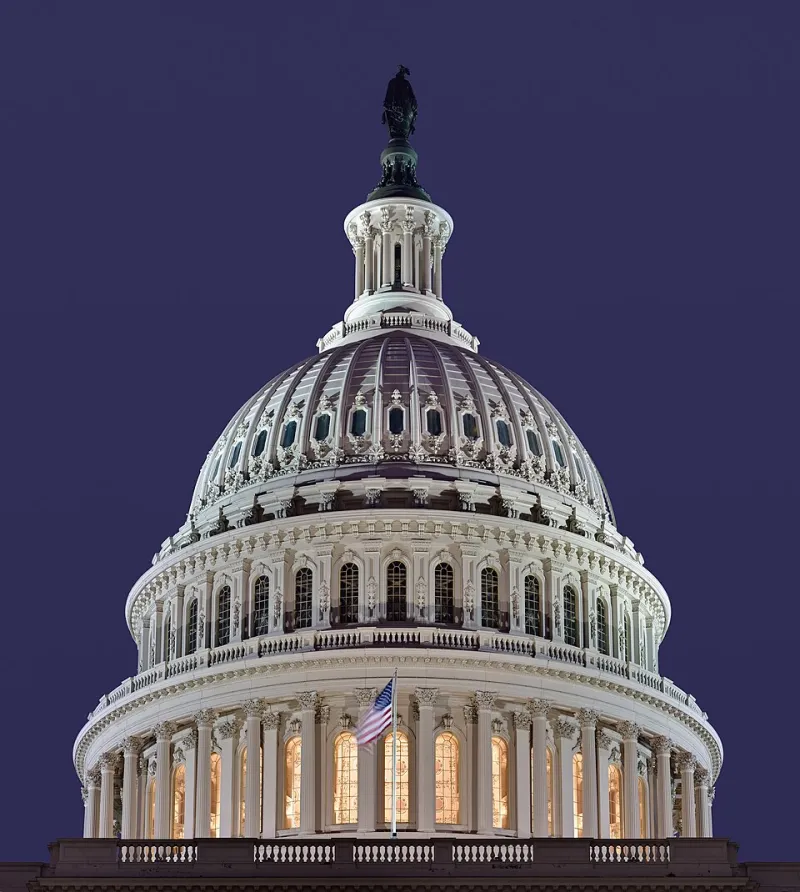
Photo: Diliff, CC BY 2.5, via Wikimedia Commons
The Headline Is the Catalyst
There is a peculiar rhythm to American crypto markets: a court filing drops at 4:31 PM on a Friday, and by Monday morning a mid-cap token is down 18% on no fundamental change whatsoever. The protocol didn't break. The treasury didn't drain. A regulator expressed an opinion.
It is tempting to treat this as noise. We would argue the opposite: in the current US environment, regulatory risk is one of the most systematic forces in digital assets, and systematic forces can be studied, scored, and traded. Traders who dismiss enforcement headlines as unpredictable are making the same mistake as traders who once dismissed funding rates as a niche derivative quirk.
Why Regulation Moves Prices More Than Fundamentals
Crypto assets are priced, to a first approximation, on access. Which exchanges list them, which custody arrangements are legal, which investor channels remain open. When the SEC or a state regulator narrows that access — even provisionally — the discount is immediate and often severe.
The pattern is well established. Assets named in enforcement actions typically gap down on the headline, bleed for days as exchanges evaluate delisting, then partially recover if the legal theory underlying the action weakens. The recovery leg is the part most US traders miss, because the news cycle has moved on by the time it arrives.
This asymmetry creates the tradeable structure: panic on filing, attrition during uncertainty, repricing on resolution. It rhymes with how biotech equities trade around FDA decisions — an analogy any American portfolio manager will recognize immediately.
A Checklist for Scoring Regulatory Risk
No trader needs a law degree to build a working risk screen. A disciplined checklist covers most of the exposure surface.
1. Named-entity history. Has the token, its foundation, or its largest issuer appeared in an SEC complaint, a Wells notice, or a state cease-and-desist? Prior naming is the single strongest predictor of future naming.
2. Distribution model. Tokens with ongoing foundation sales to US persons carry materially higher risk than fully distributed mining or staking assets. Ask who is still selling, and to whom.
3. Exchange accessibility. Is the asset available on major US-regulated platforms? A token delisted from domestic venues but liquid offshore has a structural bid problem for American investors.
4. Pending litigation posture. Is there an active court case, and has any ruling narrowed the legal theory? Summary judgment motions and appellate decisions are scheduled events — they appear on a calendar, which makes them tradeable.
5. Legislative exposure. Stablecoin bills, market-structure legislation, and tax reporting rules affect entire sectors, not single tokens. Map which category your holdings fall into before the bill moves, not after.
Building a Compliance-Aware Portfolio
The conclusion some traders draw — that US regulatory hostility means exiting the market — strikes us as both impractical and historically naive. The more durable strategy is construction, not abstention.
Core-satellite framing works well here. The core holds assets with the strongest legal footing and deepest US liquidity; the satellite holds higher-risk tokens sized so that a 40% enforcement-driven drawdown is survivable rather than terminal. Position sizing should reflect the risk score from the checklist above, not just market-cap rank.
Two further disciplines matter. First, avoid concentration in any single regulatory category — five tokens that would all be reclassified as securities under the same theory are one bet, not five. Second, keep clean records. US tax treatment of staking, lending, and swaps remains unsettled, and the cost of defensible documentation is trivial compared to the cost of an audit surprise.
The Volatility Is the Point
It is fashionable to complain that regulatory uncertainty suppresses American participation in digital assets. That may be true at the margin. But for the trader already in the market, uncertainty is not a tax — it is a source of mispricing. Assets with unresolved legal overhang trade at discounts to their functional peers, and those discounts compress when the overhang resolves.
The honest position is this: US regulatory risk is real, asymmetric, and here to stay for the foreseeable future. Traders who score it, size for it, and trade the resolution cycle will outperform those who either ignore it or let it chase them out of the asset class entirely. The chain isn't going anywhere. Neither, evidently, is the paperwork.