Separating Signal from Noise: A Framework for Identifying Cryptocurrencies Built to Endure Market Collapses
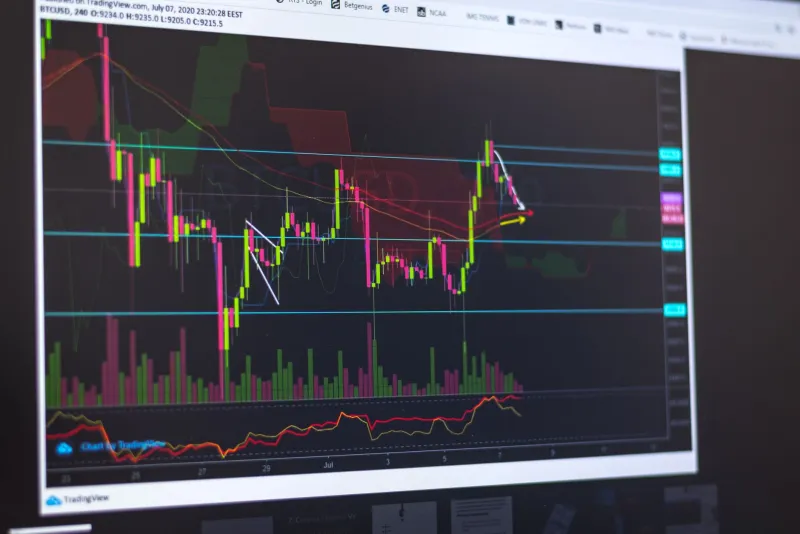
Every market cycle in the history of cryptocurrency has followed a recognizable pattern: euphoric appreciation, speculative excess, catastrophic correction, and then a painful reckoning in which the overwhelming majority of projects quietly disappear. The 2018 bear market erased roughly 90% of altcoin valuations. The 2022 collapse was similarly unforgiving, wiping out hundreds of billions in market capitalization and permanently shutting the door on projects that had once attracted serious institutional attention.
For traders operating in the US market, the question is not whether another significant correction will occur—it is whether their portfolios contain the assets capable of surviving one. At ChainPulse 99, we believe that survival is not a matter of luck. It is the predictable outcome of rigorous, data-driven evaluation applied before capital is committed.
The following framework outlines the core dimensions serious traders should assess when determining whether a cryptocurrency has the structural integrity to endure what markets inevitably deliver.
Developer Activity: The Heartbeat of a Living Protocol
A cryptocurrency project is, at its foundation, a software product. Like any software product, it requires continuous development, maintenance, security patching, and iterative improvement to remain relevant. One of the most reliable leading indicators of long-term project viability is the sustained activity of its development team.
Traders should examine public repositories—primarily GitHub—to assess commit frequency, the number of active contributors, and the pace at which open issues are resolved. A project demonstrating consistent developer engagement over multiple years, particularly through bear markets when speculative interest evaporates, signals genuine organizational commitment rather than opportunistic token launches.
Conversely, repositories that show sporadic bursts of activity followed by extended periods of silence often indicate that development has effectively stalled. When technical momentum slows, so does the capacity to adapt to competitive threats, security vulnerabilities, and shifting market demands.
Real-World Utility: Does the Protocol Solve an Actual Problem?
Perhaps the most fundamental question any trader should ask about a cryptocurrency is deceptively simple: what problem does this actually solve, and is that problem significant enough to justify a decentralized solution?
Projects that can demonstrate measurable, real-world adoption—active wallets, transaction volume growth, enterprise partnerships, or integration within functioning applications—occupy a fundamentally different risk category than those whose value propositions remain largely theoretical. Decentralized finance protocols processing billions in genuine transaction volume, supply chain solutions integrated with verifiable corporate partners, and payment networks with documented merchant adoption all exhibit the kind of tangible utility that gives a project staying power through market distress.
US traders should be particularly attentive to the distinction between speculative narratives and documented traction. A compelling white paper does not constitute utility. Audited smart contracts processing real economic activity do.
Regulatory Posture and Compliance Infrastructure
The regulatory environment surrounding digital assets in the United States has grown significantly more complex and consequential over the past several years. The Securities and Exchange Commission, the Commodity Futures Trading Commission, and the Financial Crimes Enforcement Network have all intensified their oversight of the crypto sector. In this climate, a project's relationship with regulatory compliance is no longer a peripheral concern—it is a core survival factor.
Projects that have proactively engaged with regulatory frameworks, pursued legal opinions regarding their token classification, maintained transparent corporate structures, and demonstrated a willingness to cooperate with oversight bodies are substantially better positioned to operate in a tightening regulatory environment. Those that have structured themselves to evade scrutiny, or whose founding teams lack accountability to identifiable legal jurisdictions, face existential exposure as enforcement activity increases.
For US-based traders specifically, holding positions in assets that may be subject to enforcement actions or exchange delistings carries portfolio risk that extends well beyond ordinary market volatility. Regulatory due diligence is no longer optional for serious participants.
Market Structure and Liquidity Depth
A project's market structure reveals much about its institutional credibility and the practical feasibility of entering or exiting positions at scale. Traders should examine several dimensions: the number of reputable exchanges listing the asset, average daily trading volume relative to market capitalization, bid-ask spreads across order books, and the concentration of token supply among early investors or the founding team.
Highly concentrated token distributions represent a structural vulnerability that becomes acutely dangerous during market corrections. When a small number of wallets control a disproportionate share of circulating supply, coordinated selling—whether intentional or driven by forced liquidations—can produce price dislocations that far exceed broader market moves.
Conversely, assets with deep liquidity across multiple tier-one exchanges, well-distributed token ownership, and consistent institutional participation in their order books tend to demonstrate greater price stability and recoverability following market shocks. Liquidity is not glamorous, but it is protective.
Tokenomics and Treasury Sustainability
The economic architecture underlying a cryptocurrency project determines its capacity to fund operations, incentivize network participants, and survive extended periods of reduced market interest. Traders should scrutinize token emission schedules, treasury reserves, and the mechanisms by which the project funds ongoing development.
Projects relying entirely on token inflation to compensate developers and validators face a compounding challenge in bear markets: declining token prices reduce the real value of compensation, which in turn creates pressure on team retention and operational continuity. Projects with diversified treasury reserves—holding stablecoins or other non-correlated assets alongside their native tokens—are better equipped to maintain operations when market conditions deteriorate.
Additionally, vesting schedules for founding team allocations deserve careful examination. Aggressive early unlock schedules that align large team allocations with speculative market peaks have historically preceded significant selling pressure and project abandonment.
Community Resilience and Organizational Governance
Finally, the human dimension of a cryptocurrency project—its community depth, governance structures, and organizational resilience—should not be underestimated as a survival factor. Projects supported by engaged, technically sophisticated communities that actively participate in governance decisions tend to demonstrate greater adaptive capacity than those dependent on a single charismatic founder or a small, centralized decision-making body.
Decentralized governance, when implemented thoughtfully, distributes both the responsibility and the motivation for project continuity across a broader participant base. This organizational architecture makes a project more resistant to the single points of failure—regulatory action against a founder, team departures, or reputational crises—that have historically destroyed centralized projects.
Building a Survival-Focused Portfolio
The traders who emerge from market corrections with capital intact—and positioned for the subsequent recovery—are rarely those who correctly timed the top. They are typically those who held positions in assets that possessed the structural characteristics to endure sustained adversity: active development, verifiable utility, regulatory credibility, sound market structure, sustainable tokenomics, and resilient governance.
At ChainPulse 99, we maintain that the most valuable intelligence a digital asset trader can possess is not a prediction about price direction—it is a disciplined analytical framework for evaluating which assets deserve a place in a portfolio built for the long term. The next correction will arrive. The question is whether your holdings are among the assets that will still be standing when it concludes.